The Memeification of Arab American Electoral Power
In the 2024 presidential election, Arab Americans voted on their own priorities. In the runup to the election, Arab American community leaders made appeals to the Democratic establishment to halt military aid to Israel in order to stop the ongoing genocide in Gaza. When reaching out to elected representatives did not have the desired effect, the community decided to use their collective electoral power to make a statement. The Uncommitted movement was born during the Democratic primaries in the spring of 2024.
The Uncommitted movement was specifically asking voters to select "uncommitted" when casting their primary ballot for the presidential race. The objective of this movement was to garner enough uncommitted votes that the Democratic party would be forced to reconsider their support for any presidential candidate that did not, at least, recognize the genocide.
In the hours following Trump's 2024 presidential victory, many in the Democratic establishment voter base partly blamed the loss of the election on the Arab American community (and the broader Muslim American community). Focusing specifically on election results that showed voters in heavily Arab American districts, like Dearborn, MI, did not support the Democratic candidate as heavily as in previous elections. Critics felt that Arab Americans should have held their noses, as it were, and voted for Kamala Harris, despite their fervent support of Palestinian lives. The vitriol that was unleashed on the community was not novel – Anti-Arab racism and Islamophobia have been embedded in much of American political and cultural ideology for many decades.
But, in the lead up to the 2026 midterm elections, the political climate in the country had shifted. Zohran Mamdani's campaign for New York City mayor—even against all of the Islamophobic attacks aimed at him and his supporters—empowered a base of young people and others who had felt excluded from the Democratic party machine. His victory also helped show that progressive non-white candidates could win in major races.
At the same time, Michigan senate candidate Dr. Abdul El-Sayed built his campaign on, in part, recognizing the genocide and arguing to get money out of politics (specifically focusing on AIPAC and the lobby’s support for his opponent). And his popularity, combined with his Arabness and Muslim faith, made him a lightning rod for anti-Arab and Islamophobic rhetoric.
But as the El-Sayed campaign rolled towards the midterm general election, the same vocal support for Palestine that caused backlash against Arab Americans two years earlier, was now one of the driving forces of the national progressive cause.
So, when El-Sayed was personally attacked by the president, the vice president, elected officials on both sides of the aisle, and countless pundits, they didn’t only attack his progressive views but, more often than not, attacked his Arab American identity, his familial ties with Egypt, and his Muslim faith—and often in very vile and racist ways. Given all of this context, it was encouraging for the community to see the increasing level of support for Dr. El-Sayed from people of all backgrounds throughout the country; and to see El-Sayed become a darling of the internet meme-o-sphere.
The following discussion is not meant to be comprehensive. The shift in Arab American electoral power over the last few years, combined with the increased vitriol against the community, deserves full attention and study. We just wanted to take the opportunity to highlight the trends we are seeing in memes and online content and offer some potential considerations for their meaning.
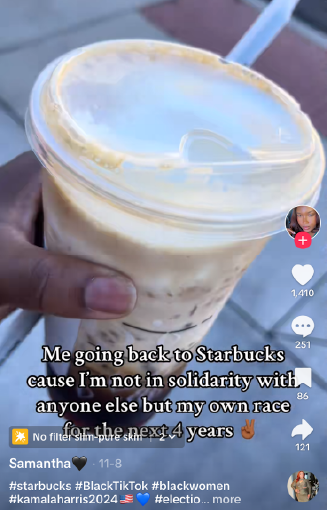
What do we mean by memeification of Arab American Electoral Power?
Memeification is “the process of turning an event, image, person, etc. into a meme (= an idea, joke, image, video, etc. that is spread very quickly on the internet).” [https://dictionary.cambridge.org/us/dictionary/english/memeification] A meme is essentially a digital asset that gets reproduced and shared widely. In modern media, it is one of the fastest and most effective ways to communicate an idea because it compresses complexity, narrative, and emotion into a single image, video, or phrase.
What is the event that we see as being memeified? The rise of Arab American electoral power, both through the increased representation of Arab American candidates at local, state and national office and the increased attention on Arab Americans and Arab American-related causes as a consequential bloc.
As stated above, the lead-up to the 2024 presidential election saw unprecedented coverage of the Arab American community in Michigan (a key swing state) and elsewhere. Media outlets from across the globe descended on metro Detroit and its highly concentrated Arab American communities, hoping to answer the question: How will Arab Americans vote?
In reality, there should never have been an expectation that Arab Americans across Michigan or across the country would vote the same way. The community is extremely diverse across all socio-demographic aspects: age, religion, nationality, immigration status, income, etc. But poll after poll, for many decades, has shown that as a community, the number one issue that Arab Americans will rally behind is the rights and freedom of the Palestinian people.
During the 2026 election cycle the Arab American and Muslim American communities were once again seen as an influential electoral bloc—only this time they were seen as a potential way forward for the progressive movement
Below is a brief overview of three categories of memes that we found to be illustrative of the mood of the 2026 election and post-election moment.
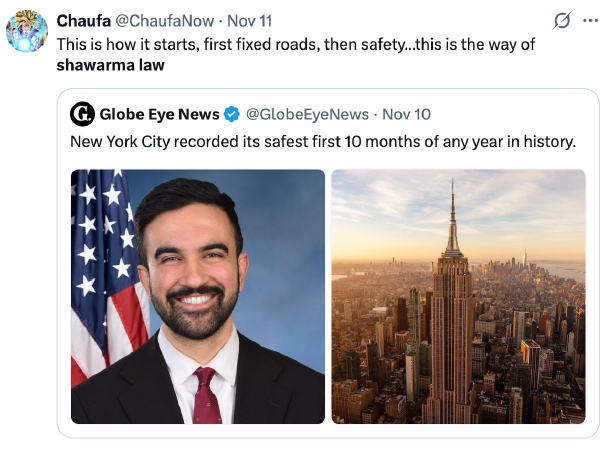
Shawarma Law
The absurdity of the right-wing fear of a Muslim or Arab takeover of America, based on the election of a singular senator with Arab heritage and Muslim religious identity, was met with many powerful and lampooning memes.
The talking point most often spouted by Islamophobic commenters and elected officials was that Dr. Abdul El-Sayed wanted to become senator so he could help usher in the Islamification of America through the widespread adoption of Shariah Law. The charge was leveled at El-Sayed so often and so vehemently that supporters of El-Sayed, but also progressives more broadly, could not help but make fun of the focus on Shariah Law, which was used as a fear-mongering tactic to divert attention away from El-Sayed’s increasingly popular policy platforms.
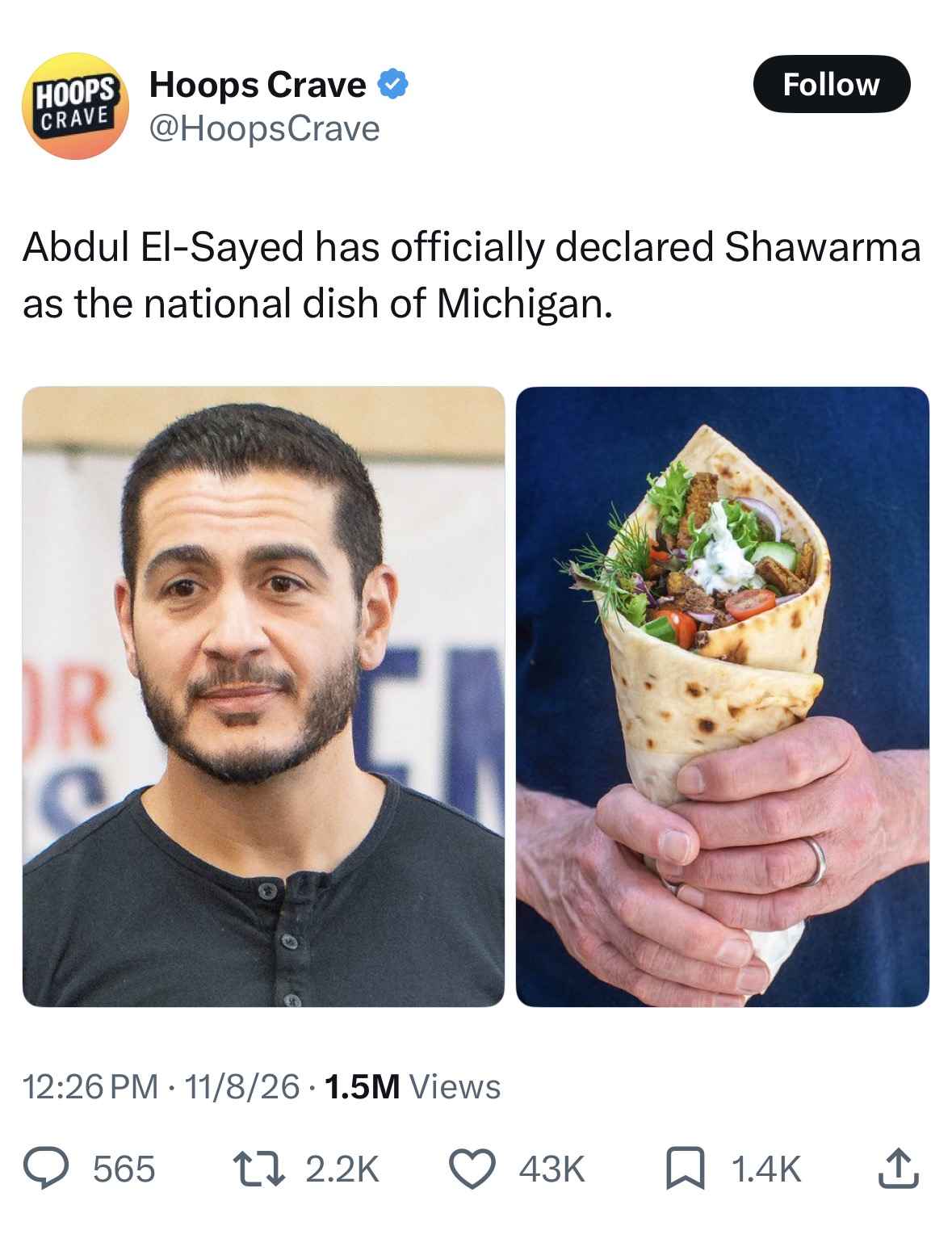
As a playful turn of phrase, many people began posting about how they hope that El-Sayed’s victory ushers in a new era of “shawarma law,” referring to the iconic Middle Eastern sandwich of chicken, pickles, and garlic sauce.
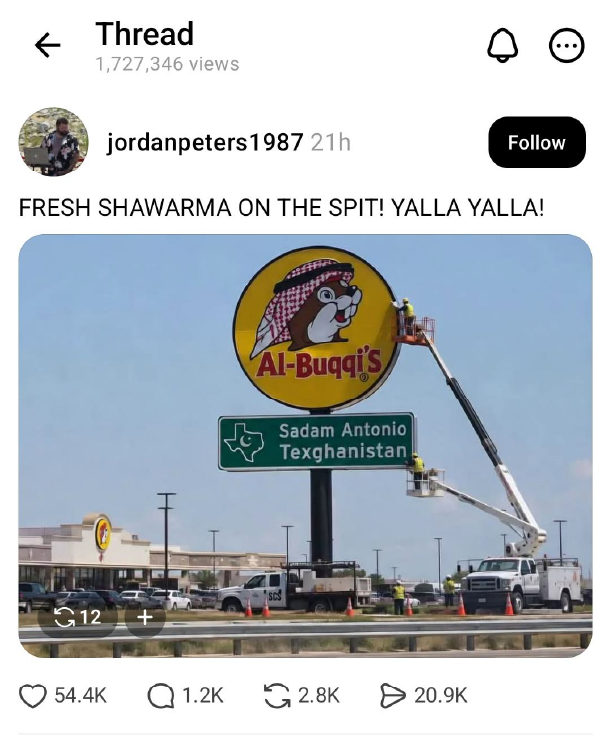
Arabization and Islamification
The focus on shawarma law also closely mirrors the memes that mocked the absurdity of the imaginary right-wing fear of an American future filled with nothing but Arabic language and Muslim religious obligation.
There was much attention paid to conservative commentator Laura Loomer, who posted after El-Sayed’s victory that “I hope everyone is learning Arabic.” Again, this absurd and racist rhetoric is based in the idea that a small number of Arab American elected officials will somehow undermine the entire American system of government.
An interesting parallel to this meme are the memes that were circulating in 2016 in response to the claim that without Trump in office, there will be “taco trucks on every corner,” This claim was rooted in the white supremacist talking points that unchecked immigration will eventually erase the white race in the United States. In 2026, liberals and progressives have responded to racist claims that Muslims and Arabs will take over the country by creating and disseminating memes that envision a reality in which the supposed "take over" is nothing more than increased cultural visibility.
JD, Habibi
During his victory speech, now Senator-elect Abdul El-Sayed jokingly addressed Vice President JD Vance by saying “JD, Habibi… there is this delicious irony in the fact that you’re constitutionally obligated to swear me in in January.” The initial way El-Sayed addressed the Vice President took the internet by storm. “JD, Habibi” has become a vocal stim for the masses. The phrase itself combines both the use of Arabic with a type of sarcasm that is traditionally found within southern American vernacular. El-Sayed’s use of Habibi, which means “my love” in Arabic, is used as a vehicle to both jab at Vance for the blatant anti-Arab racism and Islamophobia he exhibited during El-Sayed’s campaign and as a sarcastic tool similar to that of the phrase “bless your heart” in southern American communities.

Closing Words
It is important to remember that the memeification mocking the absurdity of the claims of widespread Shariah Law takeover, or Arabic language being mandated nationally, can give the community a sense of comfort. But, the creation of memes and online content does not address the real threats and harms to Arab, Muslim, and immigrant communities that the malicious rhetoric creates. It’s fun to have fun, and it’s been quite endearing to see the widespread support for Arab American causes and the broader community, but we hope this support continues beyond the memes.