Documenting The Life and Murder of a Civil Rights Activist
Alex Odeh, a Palestinian-American civil rights activist and writer, was mortally wounded in a bombing at his office in Santa Ana, California, in 1985. His murder was part of the fabric of my childhood even though I grew up in metro Detroit, many miles from where he lived and died. As the son of a Palestinian mother, I heard his name long before I understood what happened; he was remembered at community events where calls for justice resonated with me deeply.
When I began working on the documentary film Who Killed Alex Odeh? with my colleague Jason Osder, we did not set out to solve his murder. For me, I was trying to understand a memory that had lingered with me for decades. That Alex's murder was largely forgotten by much of the American public made it all the more important of a story to tell. Jason was intrigued by the fact that he never heard about this brazen act of terrorism in the United States because of the ethnic identity of the victim.
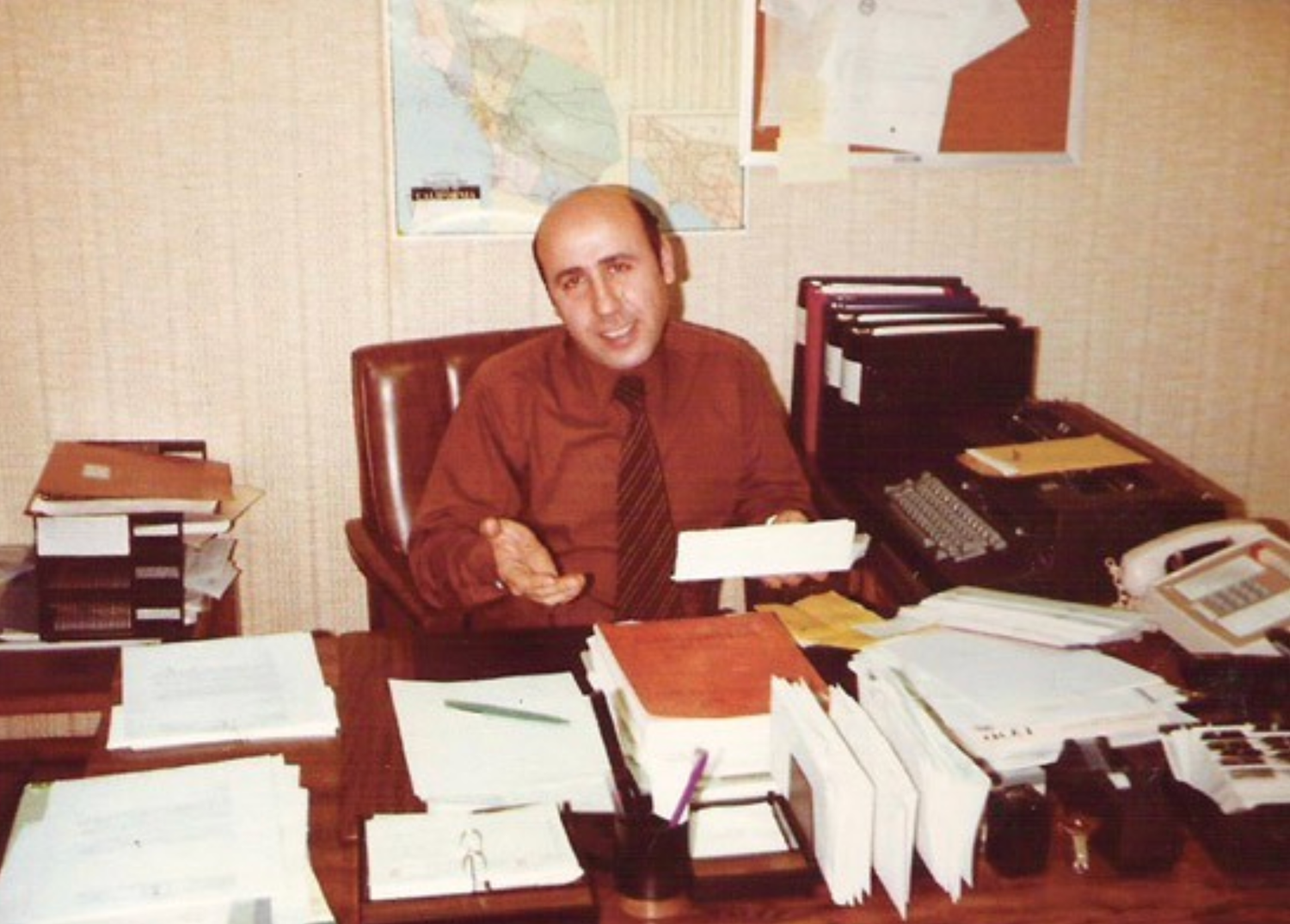
The bombing was severely underreported in news media. Political leaders were silent about it. Despite the fact it took place in the county where the president at the time, Ronald Reagan, called home, he never commented directly or contacted his family.
Within Arab American circles, his murder became a cautionary tale about the risks of speaking publicly for Palestinian rights. The lack of a criminal conviction was a stark reminder about the potency of anti-Arab discrimination and dehumanization. Alex’s murder was an attack on Arab American civic participation, after all.
In making this film, I came to learn so much more about Alex and his courageous family. Alex was known to be calm and peace-seeking, seeking dialogue even with the types of extremists who were suspected of killing him. Humble and approachable, he did not seek center stage at events. He was a community organizer who spent many evenings folding letters and stuffing envelopes to reach bring together Arab Americans all around California. Alex was also a published poet.
Alex left behind a widow, Norma, and three daughters. Norma and Helena, their eldest daughter, carried the film by opening up despite the topic clearly being one that elicited great vulnerability. The questions surrounding Odeh’s murder—about political violence, extremism, selective justice, and whose lives are deemed worthy of public concern—are urgently relevant today as Arab American activists are targets for campaigns of silencing and intimidation.
At its heart, our film Who Killed Alex Odeh? is about recognition. We cannot bring Alex Odeh back, nor can a documentary provide true closure for his family and friends. What it can do is make sure his story is seen, heard, and remembered. For decades, many in the Arab American community felt that his murder—and their grief—were treated as less important than other tragedies. By telling this story, we hope to contribute to a kind of narrative repair: affirming that Alex Odeh’s life mattered, that the search for justice matters, and that equality under the law must extend to every community.